
Answer a few simple questions about your symptoms and diet. Your personalised magnesium score appears instantly.
Magnesium Wellness Check
This short educational self-check looks at a few common lifestyle and wellness patterns, with questions based on known magnesium deficiency symptoms reported in nutrition research. It is not a medical diagnosis, and it should not replace professional advice.
For educational purposes only. If symptoms are severe, persistent, or worrying, speak to a qualified medical professional.

How Do I Know If I’m Low in Magnesium?
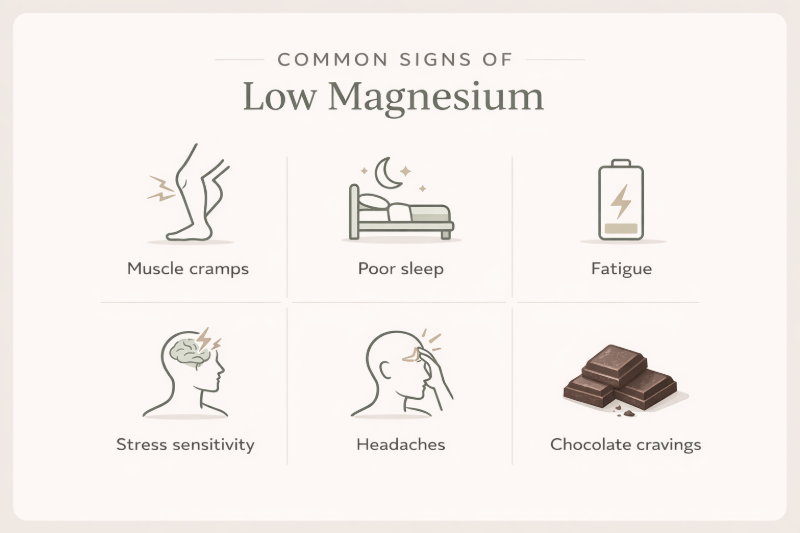
Magnesium deficiency often shows up as symptoms rather than clear blood test results. Common signs include muscle cramps, poor sleep, fatigue, anxiety, headaches, and twitching muscles. Because symptoms can overlap with other conditions, many people use a quick magnesium quiz to check whether their symptoms match common deficiency patterns.
Take the magnesium quiz above to check your symptoms.
Is There a Quiz to Check Magnesium Deficiency?
Yes. A magnesium deficiency quiz asks simple questions about symptoms, diet, sleep quality, stress levels, and muscle function. The answers are used to estimate whether your symptoms match patterns commonly associated with low magnesium intake.
What Are the Most Common Magnesium Deficiency Symptoms?
Common symptoms include:
- Muscle cramps
- Muscle twitching
- Poor sleep
- Fatigue
- Anxiety or irritability
- Headaches
- Low energy
- Chocolate cravings

Take the 30s quiz above.
Can a Blood Test Detect Magnesium Deficiency?
Blood tests measure magnesium in the bloodstream, but most magnesium in the body is stored in cells and bone. Because of this, mild deficiencies often do not appear in standard blood tests. Symptom assessments and diet analysis are often used as early indicators.
Magnesium Wellness Check
This short educational self-check looks at a few common lifestyle and wellness patterns, with questions based on known magnesium deficiency symptoms reported in nutrition research. It is not a medical diagnosis, and it should not replace professional advice.
For educational purposes only. If symptoms are severe, persistent, or worrying, speak to a qualified medical professional.
Am I Low in Magnesium? Take the 30-Second Magnesium Deficiency Quiz
Have you been feeling a little off lately and cannot quite explain why?
Maybe your sleep has become restless. Your muscles cramp at odd moments. You wake up tired even after a full night in bed. Or your mood feels unusually tense and irritable.
Many people experience these symptoms without realising that low magnesium levels can sometimes play a role.
Magnesium is involved in more than 300 processes in the body. It helps regulate muscle contractions, nerve signals, energy production, and sleep. Yet modern diets often fall short of providing enough of it.
The tricky part is that magnesium deficiency rarely announces itself clearly. Instead, it tends to show up as a cluster of small problems that slowly chip away at how you feel day to day.
That is why quick symptom checks can be useful.
Our short quiz asks a few simple questions about common signs linked with low magnesium intake. It takes less than a minute to complete and may help you see whether your symptoms match patterns often associated with magnesium deficiency.
If you have been wondering whether magnesium could be part of the picture, this is a simple place to start.
Start the magnesium quiz below and check your symptoms in under a minute.
Magnesium Deficiency Quiz – Check Your Symptoms
Some people notice something is off straight away. A twitching eyelid. A calf cramp that comes out of nowhere. That wired but exhausted feeling at bedtime.
Others just feel quietly worn down. Sleep never feels deep enough. Energy dips in the afternoon. Stress seems to hit harder than it used to.
Magnesium often sits in the background of these kinds of complaints. It helps regulate muscles, nerves, blood sugar, and the body’s stress response. When intake drops too low for too long, the body can start sending subtle signals.
The problem is that these signals rarely point clearly at magnesium. They blend in with everyday life. Stress, poor sleep, too much coffee, busy schedules. It is easy to shrug them off.
That is why a quick symptom check can be useful.
The magnesium deficiency quiz below looks at common patterns linked with low magnesium intake. It asks about sleep, muscle tension, energy levels, and diet. The goal is not to diagnose anything. It simply helps you see whether your symptoms line up with what researchers often observe in people with low magnesium levels.
It takes less than a minute.
If you have been wondering whether magnesium might be part of the puzzle, this quiz gives you a fast way to check.
Magnesium Wellness Check
This short educational self-check looks at a few common lifestyle and wellness patterns, with questions based on known magnesium deficiency symptoms reported in nutrition research. It is not a medical diagnosis, and it should not replace professional advice.
For educational purposes only. If symptoms are severe, persistent, or worrying, speak to a qualified medical professional.
Could Low Magnesium Be Causing Your Symptoms?
Here is the uncomfortable truth. A lot of people are running slightly depleted and do not realise it.
Modern food systems are not exactly generous with magnesium. Highly processed diets strip minerals away. Stress burns through magnesium faster. Coffee and alcohol push it out of the body. Heavy exercise increases demand.
Bit by bit, the gap grows.
When magnesium starts running low, the body often whispers before it shouts. The signals can be small at first. Easy to ignore. Easy to blame on being busy or tired.
Common signs people report include:
- muscle cramps or tight calves
- twitching eyelids or muscle spasms
- restless or shallow sleep
- afternoon fatigue
- tension and irritability
- headaches that creep in during the day
- strong cravings for dark chocolate
None of these symptoms prove that magnesium is low. Plenty of things can cause them.
But when several of them appear together, it can be worth paying attention.
That is exactly what our quiz looks for. It checks whether your symptoms match patterns commonly associated with low magnesium intake.
If a few of those signs felt uncomfortably familiar, it might be time to find out where you stand.
How Do I Know If I’m Low in Magnesium?
This is where things get a little frustrating.
Most people assume a simple blood test would reveal a magnesium problem. In reality, it is not that straightforward.
Only a tiny fraction of the body’s magnesium circulates in the bloodstream. Most of it lives inside cells, in bone, and deep within tissues where it supports hundreds of biochemical reactions.
Because of that, standard blood tests can look normal even when the body is running low.
That is why symptoms often become the first clues.
People start noticing patterns. Muscles that tighten up too easily. Sleep that never quite feels restorative. A nervous system that seems stuck on high alert. Energy that dips earlier than it used to.
None of these signs point directly at magnesium on their own. But when several of them appear together, they can hint that something in the body’s mineral balance might be off.
Looking at diet helps too. If leafy greens, nuts, seeds, and whole foods rarely make it onto the plate, magnesium intake can quietly drift lower over time.
A quick symptom quiz cannot diagnose anything. What it can do is highlight patterns. It can show whether your symptoms resemble those often linked with low magnesium intake.
For many people, that small insight is enough to start asking better questions about their health.
Magnesium Wellness Check
This short educational self-check looks at a few common lifestyle and wellness patterns, with questions based on known magnesium deficiency symptoms reported in nutrition research. It is not a medical diagnosis, and it should not replace professional advice.
For educational purposes only. If symptoms are severe, persistent, or worrying, speak to a qualified medical professional.
Why Magnesium Deficiency Is More Common Than People Think
Magnesium deficiency is not rare. In fact, many nutrition researchers believe it is quietly widespread.
One reason is simple. The modern diet has changed dramatically.
Highly processed foods dominate supermarket shelves. These foods are convenient and often tasty, but they tend to contain far fewer minerals than whole foods.
At the same time, modern farming practices have gradually reduced the mineral content of soil. When soil contains less magnesium, the crops grown in it also contain less.
Then there is lifestyle.
Stress increases the body’s need for magnesium. Caffeine and alcohol can increase magnesium loss through urine. Intense exercise places extra demand on the body’s mineral reserves.
Put those factors together and the result is a quiet nutritional squeeze.
Many people are not severely deficient. Instead, they sit in a grey zone where magnesium intake falls just short of what the body needs to run smoothly.
That is often when the subtle symptoms begin to appear. Slight tension in the muscles. Sleep that feels lighter. Energy that never quite reaches full capacity.
Because these changes happen gradually, they are easy to overlook.
Which is why a quick symptom check can be surprisingly helpful. It gives you a chance to step back and see whether those small signals might share a common thread.
Most Common Magnesium Deficiency Symptoms
When magnesium intake drops too low, the body often starts sending quiet signals. Not dramatic alarms. Just small things that keep showing up and slowly getting your attention.
The challenge is that these symptoms rarely appear alone. They tend to show up as a pattern. One or two might seem harmless. Three or four together can start to paint a clearer picture.
Here are some of the most common symptoms people notice when magnesium levels begin running low.
Muscle and nerve symptoms
Magnesium plays a major role in muscle relaxation and nerve signalling. When levels fall, muscles can become more reactive than usual.
People often report:
- sudden calf cramps
- muscle spasms
- twitching eyelids
- tight shoulders or neck
- restless legs at night
These symptoms can feel random at first. A twitch here. A cramp there. Over time they can become more frequent.
Magnesium Wellness Check
This short educational self-check looks at a few common lifestyle and wellness patterns, with questions based on known magnesium deficiency symptoms reported in nutrition research. It is not a medical diagnosis, and it should not replace professional advice.
For educational purposes only. If symptoms are severe, persistent, or worrying, speak to a qualified medical professional.
Sleep and stress symptoms
Magnesium helps regulate the nervous system and supports relaxation. When intake is low, sleep can become lighter and stress can feel harder to shake off.
Common complaints include:
- difficulty falling asleep
- waking during the night
- feeling wired before bed
- tension and irritability
Some people describe it as feeling tired but strangely alert at the same time.
Energy symptoms
Magnesium also helps produce energy inside cells. When levels drop, energy can dip too.
People sometimes notice:
- persistent fatigue
- afternoon energy crashes
- low physical stamina
- general weakness
None of these symptoms prove magnesium deficiency on their own. But when several of them appear together, it may be worth looking a little closer.
Foods That Are Naturally High in Magnesium
The good news is that magnesium is widely available in natural foods. The challenge is that many of the richest sources are often missing from modern diets.
Highly processed foods tend to contain very little magnesium. Whole foods, especially plant foods, usually contain much more.
Some of the best natural sources include:
- pumpkin seeds
- almonds and cashews
- spinach and leafy greens
- dark chocolate
- black beans
- lentils
- avocados
- whole grains

Pumpkin seeds are particularly impressive. Just a small handful can provide a large portion of the body’s daily magnesium needs.
Leafy greens also play a big role. Magnesium sits at the centre of the chlorophyll molecule, which means plants like spinach naturally contain a good supply.
For people who eat a varied whole food diet, magnesium intake often improves naturally. But when diets lean heavily on refined grains, packaged foods, and quick convenience meals, magnesium levels can slowly drift downward.
That slow drift is one reason so many people feel slightly depleted without understanding why.
Magnesium Wellness Check
This short educational self-check looks at a few common lifestyle and wellness patterns, with questions based on known magnesium deficiency symptoms reported in nutrition research. It is not a medical diagnosis, and it should not replace professional advice.
For educational purposes only. If symptoms are severe, persistent, or worrying, speak to a qualified medical professional.
Who Is Most Likely to Be Low in Magnesium?
Magnesium deficiency can affect almost anyone, but certain lifestyles make it more likely.
Some people burn through magnesium faster than they replace it. Others simply do not get enough from their diet.
Groups that often have lower magnesium levels include:
People under constant stress
Stress hormones increase magnesium use inside the body. Long periods of mental pressure can gradually drain magnesium reserves.
Heavy coffee drinkers
Caffeine can increase magnesium loss through urine. Several cups of coffee per day can slowly push levels downward.
Athletes and highly active people
Exercise increases magnesium demand because muscles rely on it for contraction, recovery, and energy production.
People who eat few whole foods
Diets dominated by processed foods often provide far less magnesium than diets built around vegetables, nuts, seeds, and legumes.
Older adults
Magnesium absorption can decline slightly with age, which makes intake more important later in life.
If you recognise yourself in one or more of these groups, it does not mean you are definitely low in magnesium. It simply means your body may have a higher demand for it.
That is exactly the kind of pattern the quiz below helps explore.
Should You Take a Magnesium Deficiency Quiz?
At this point you might be wondering whether a quick quiz can actually tell you anything useful.
The honest answer is that a symptom quiz is not a medical test. It cannot diagnose magnesium deficiency and it does not replace professional advice.
What it can do is highlight patterns.
Many people experience the same clusters of symptoms when magnesium intake drops below what their body needs. Muscle tension, restless sleep, low energy, and stress sensitivity often appear together. A short screening quiz looks for these kinds of combinations.
Think of it as a quick self check.
Instead of guessing or endlessly searching for explanations, the quiz helps you see whether your symptoms resemble the patterns commonly linked with low magnesium intake.
For many people, that simple insight is enough to start paying closer attention to diet, lifestyle, and mineral intake.
The quiz only takes about a minute to complete and gives you a quick indication of where you might stand.
Take the Magnesium Deficiency Quiz
If several of the symptoms described earlier felt familiar, this is the easiest way to check whether they form a recognisable pattern.
The magnesium deficiency quiz looks at common signals linked with low magnesium intake, including sleep quality, muscle tension, stress levels, diet, and daily energy.
It only takes a few simple questions.
Many people are surprised by what they discover. Small symptoms that seemed unrelated often start to make more sense when viewed together.
If you are curious where you might fall on the spectrum, take the quiz below and check your results.
Magnesium Wellness Check
This short educational self-check looks at a few common lifestyle and wellness patterns, with questions based on known magnesium deficiency symptoms reported in nutrition research. It is not a medical diagnosis, and it should not replace professional advice.
For educational purposes only. If symptoms are severe, persistent, or worrying, speak to a qualified medical professional.
Frequently Asked Questions About Magnesium Deficiency
How can I tell if I have magnesium deficiency?
Magnesium deficiency often shows up through symptoms rather than clear laboratory results. People commonly notice muscle cramps, poor sleep, fatigue, headaches, or increased stress sensitivity. Because these symptoms can overlap with many other conditions, patterns across several symptoms are often more informative than any single sign.
What are the early signs of low magnesium?
Early signs can include muscle twitching, mild cramps, restless sleep, irritability, and afternoon fatigue. These symptoms often appear gradually and can be easy to overlook, which is why many people do not realise magnesium intake may be part of the issue.
Can a blood test detect magnesium deficiency?
Standard blood tests measure magnesium circulating in the bloodstream, but most magnesium in the body is stored inside cells and bone. Because of this, mild deficiencies do not always appear clearly in routine blood work.
How long does it take to improve low magnesium levels?
This varies depending on diet, lifestyle, and individual health factors. Some people notice improvements in sleep or muscle relaxation within days of increasing magnesium intake, while deeper replenishment of body stores can take longer.
Check Your Magnesium Level in 30 Seconds
If you have been wondering whether magnesium could be affecting how you feel, the quickest way to explore that possibility is with a simple symptom check.
The short quiz below looks at common patterns linked with magnesium intake, including sleep quality, muscle function, diet, stress levels, and daily energy.
It takes less than a minute to complete.
Your answers are used to estimate whether your symptoms resemble those often seen in people with low magnesium levels. The result is not a diagnosis, but it can offer a helpful starting point.
If you are curious where you stand, take the quiz below and see what your symptoms might be telling you.
Magnesium Wellness Check
This short educational self-check looks at a few common lifestyle and wellness patterns, with questions based on known magnesium deficiency symptoms reported in nutrition research. It is not a medical diagnosis, and it should not replace professional advice.
For educational purposes only. If symptoms are severe, persistent, or worrying, speak to a qualified medical professional.